Same in the 2024 and 2025-refresh wiring diagrams.
 Troubleshooting故障检查
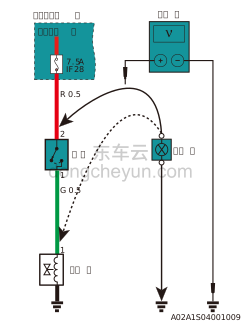 |
1. Voltage detection1. 电压检测
|
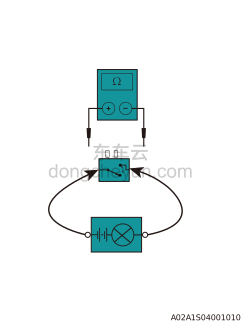 |
2. Power on test2. 通电测试
1 Disconnect the negative 12V battery harness.断开蓄电池负极线束。
2 Connect one lead from a self-powered test lamp or resistance meter to the component to be tested. When using a resistance meter, first short-circuit the two wires of the resistance meter and use a zero adjuster to zero the resistance meter.用自带电源测试灯或电阻表的一根引线连接到需检测的部件上。使用电阻表时,先把电阻表的两根导线短接,用调零器把电阻表调零。
3 Connect the other lead of the detector to the other terminal of the load to be tested.用检测仪的另一导线连接到要检测的负载另一端子上。
4 The built-in power test light is on, indicating continuity; when using an resistance meter, the resistance is very small or close to 0Ω, indicating that the component has good conduction status.自带电源试灯亮,表示导通;使用电阻表时,电阻很小或接近0Ω,表示该部件具有良好的导通状态。
|
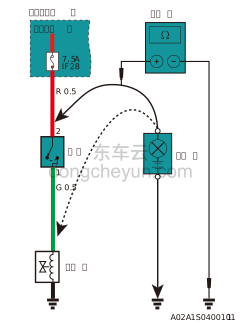 |
3. Short circuit test3. 短路测试
1 Disconnect the negative 12V battery harness.断开蓄电池负极线束。
2 Connect one of the wires from the self-powered test light or ohmmeter to the output terminal of the fuse.把自带电源测试灯或电阻表的一根导线连接到保险丝的输出端子上。
3 Connect the other lead of a self-powered test lamp or ohmmeter to ground.把自带电源的测试灯或电阻表的另一导线接地。
4 Disconnect the fuse from all associated electrical loads.断开保险丝所有相关的电气负载。
5 Check the wiring from the point closest to the fuse.从保险丝最近处依次排查线路。
6 The built-in power test light is on or the resistance meter displays a value below 5Ω, indicating that this part is short-circuited to ground.自带电源试灯亮或电阻表显示值低于5Ω,说明这部分与接地短路。
|

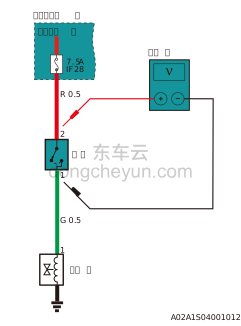 |
4. Voltage drop test4. 电压降测试
1 Connect the positive voltmeter lead to the end of the wire closest to the 12V battery (connector side or switch side).电压表正极导线连接到接近蓄电池的导线的一端( 接头侧或开关侧)。
2 Connect the negative voltmeter lead to the other end of the wire (other side of the connector or switch).电压表负极导线连接到导线的另一端(接头或开关的另一侧)。
3 Open or engage the switch to make the circuit work.断开或接合开关,使电路工作。
4 A voltmeter will show the voltage difference between two points.电压表将显示两个点之间的电压差。
5 If the voltage difference exceeds 0.1 V (less than 50mV for a 5 V circuit), it can indicate a fault in the circuit. Check the circuit for loose, oxidized, or corroded connections.如果电压差超过0.1 V (5 V 电路应小于50mV),可以表明电路上有故障,检查松动、氧化或腐蚀的连接电路。
|